
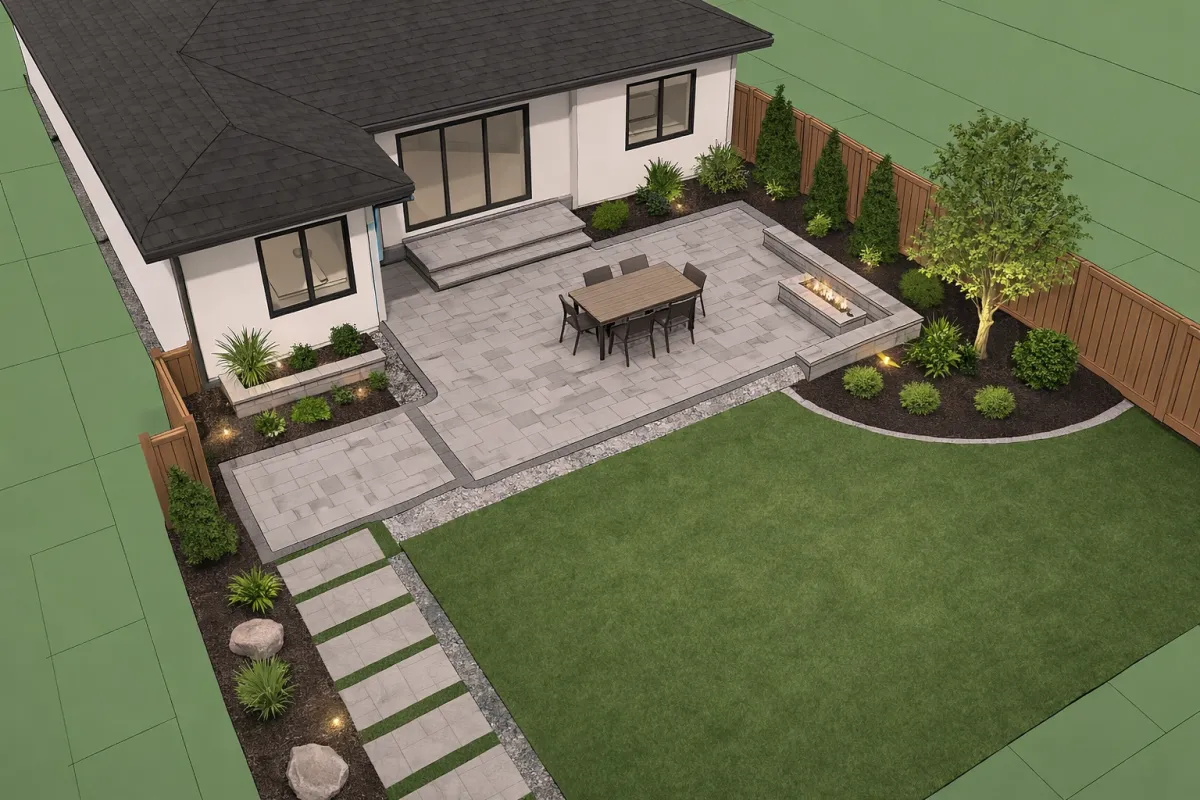
Visualizing Excellence How 3D Design Removes the Guesswork from Your Landscape Project
Visualizing Excellence
How 3D Design Removes the Guesswork from Your Landscape Project
Homeowners rarely struggle to imagine what a new patio is. The hard part is imagining what it will look like at your house, with your brick color, your yard grade, your landscaping, and your lifestyle.
That is where landscape projects can feel stressful. You are spending real money on something permanent, and most “plans” are still a few measurements and a rough sketch. If you cannot truly visualize the end result, you are left hoping everything turns out the way you pictured it.
That is why 3D design has become one of the most valuable upgrades in modern hardscape planning. It turns a concept into a clear visual plan, helps align expectations early, and reduces costly surprises once construction begins.
In this article, we will explain what 3D design actually includes, how it prevents common project mistakes, and why it is one of the easiest ways to feel confident in your investment.
What 3D Design Means for Hardscape and Landscape Projects
3D design is a realistic digital model of your outdoor project that shows how the finished space will look and function before installation begins.
Depending on the scope, a 3D design can show:
Patio shape, size, and layout
Walkway routes and transitions
Driveway patterns, borders, and accents
Steps, landings, and retaining walls
Outdoor kitchens, seating walls, and fire features
Planting zones and mulch beds
Lighting placement and how it frames the space
Elevation changes and how slopes will be handled
Most importantly, it shows how these pieces work together as one cohesive environment.
A basic sketch tells you what is being built. 3D design helps you feel what it will be like to live with it.
The Biggest Problem 3D Design Solves
You Cannot Fix What You Cannot See
Many outdoor projects run into issues not because the contractor is doing sloppy work, but because the homeowner and contractor were imagining different end results.
Common examples:
The patio looked bigger in your head
The walkway angle felt off once it was installed
The step placement changed how the yard flowed
The retaining wall height felt more prominent than expected
The border color looked too dark against the home exterior
The outdoor kitchen crowded the seating area
The fire feature ended up too close to traffic paths
These are not small issues. They affect how the space functions every day.
3D design helps prevent these “wish we had known” moments before the first stone is set.
7 Ways 3D Design Removes Guesswork
1. You see scale and proportion clearly
Most homeowners underestimate or overestimate size when looking at a flat sketch. 3D design makes the space easier to understand.
You can see:
How many people fit comfortably
Whether furniture layouts make sense
Whether walking paths feel tight or open
How the project relates to the house and lot size
2. You avoid costly mid project changes
Changing the plan after excavation starts can create delays and added costs.
3D design encourages decisions early, including:
Final shape and dimensions
Feature placement
Materials and color direction
Step locations and heights
Wall layout and lengths
When the plan is clear, the build process is smoother.
3. It reveals traffic flow and function
Great outdoor spaces are not only pretty. They work.
3D design helps answer practical questions like:
Do I have a clean path from the driveway to the door?
Will guests naturally gather where I want them?
Is the grill area too close to seating?
Can you open the gate easily?
Where will snow get pushed in winter?
Function is where quality shows up long term.
4. You can compare options side by side
A 3D design makes it easier to explore choices without committing.
For example:
Two patio shapes
Two paver patterns
Border vs no border
Straight vs curved walkway
Fire pit location A vs location B
Seat wall vs additional planting bed
Seeing these options helps you choose with confidence.
5. It improves material selection
Paver colors, wall textures, and coping choices look different in different settings.
A 3D design helps you choose materials that match:
Your home’s exterior colors
Roof tones
Existing landscaping
Desired style, modern, classic, natural, or transitional
This is how a project ends up looking intentional instead of pieced together.
6. It helps plan elevation and drainage
This is a huge one in Chicagoland.
Drainage and pitch are not glamorous, but they protect your investment. 3D design can help visualize:
Where slopes will go
How water will move
Where low spots might form
How steps and landings handle grade changes
How transitions meet the driveway, garage, or foundation
When drainage is planned early, you avoid water issues later.
7. It creates alignment and accountability
A detailed plan protects both the homeowner and the contractor.
You are not relying on memory or vague descriptions. You have a clear target that guides:
Material counts
Installation layout
Feature placement
Project expectations
That reduces confusion and helps the final result match the vision.
Who Benefits Most from 3D Design?
3D design is helpful for nearly any hardscape project, but it is especially valuable when:
The project includes multiple features
You have a larger yard or complex layout
Elevation changes need steps or retaining walls
You want a high end custom look
You feel unsure about size, shape, or placement
You want the project completed with fewer surprises
If you are investing in a new driveway, patio, or full outdoor living space, 3D design is one of the simplest ways to protect that investment.
What to Expect During a 3D Design Process
A strong 3D design process usually includes:
Site measurements and photos
A conversation about how you use the space
Style direction and material preferences
A draft concept for review
Revisions based on your feedback
A final plan ready for installation
This process keeps the project collaborative while still being structured and efficient.
Final Thoughts
Clarity Is the Real Upgrade
Outdoor projects feel stressful when you cannot visualize the outcome. 3D design removes that uncertainty. It helps you make decisions early, avoid expensive changes later, and move forward knowing the final result will match what you approved.
When you can see the finished space before installation begins, the whole experience becomes easier.
Ready to Plan With Confidence?
Interlocking Pavers Inc. has been serving the Chicagoland area since 1984, designing and building hardscape projects that look premium and hold up through Midwest weather. If you are considering a new driveway, patio, or outdoor living space, 3D design can help you lock in the vision and move forward with a plan you feel great about.
Reach out today to discuss your project.